
Table of Contents
- What to Do If Your Car Won’t Start
- Jump-Starting a Car Safely
- Dead Battery Roadside Assistance vs. Towing
- Recognizing Alternator Failure Symptoms
- What Happens After a Successful Boost
- How to Request Emergency Roadside Service
- Special Considerations for Electric and Hybrid Vehicles
- Frequently Asked Questions
Last Updated: October 18, 2026
What to Do If Your Car Won’t Start
A car that won’t start is one of the most frustrating roadside emergencies you can face. The most common culprit is a dead battery, and knowing how to recognize the problem and respond quickly can save you hours of frustration. At Towing PerfekTow, we help drivers across the province handle these situations safely and efficiently every day. Understanding the difference between a simple dead battery and a deeper mechanical issue is the first step toward getting back on the road.
Signs of a Dead Battery
When your battery dies, your car gives you clear warning signals. The engine won’t turn over when you turn the key, but you’ll hear rapid clicking sounds from under the hood. Your dashboard lights may flicker or dim, and the headlights will be noticeably weak or completely off.
A dead battery feels different from other starting problems. If the engine cranks but doesn’t fire, that’s usually a fuel or ignition issue. If there’s complete silence, no clicks, no cranking, nothing, that’s typically battery failure. The battery is responsible for powering the starter motor, which turns the engine over. Without it, nothing happens.
Cold weather makes dead batteries more common. In freezing temperatures, a weak battery loses roughly 50% of its power capacity. If your battery was already struggling, winter will finish the job.
When to Call for Help
You should call for emergency roadside service immediately if you’re stranded in traffic, on a highway, or in an unsafe location. Trying to jump-start your car in heavy traffic or poor visibility puts you at risk. A professional towing service for dead battery situations can arrive quickly and handle the work safely while you stay inside your vehicle.
Call for help if you’ve already tried jump-starting and it didn’t work. If the battery won’t hold a charge after a boost, or if your car dies again within a few minutes, that’s a sign of a deeper problem, possibly a failing alternator. In that case, you need towing to a repair shop, not just a quick boost.
Jump-Starting a Car Safely
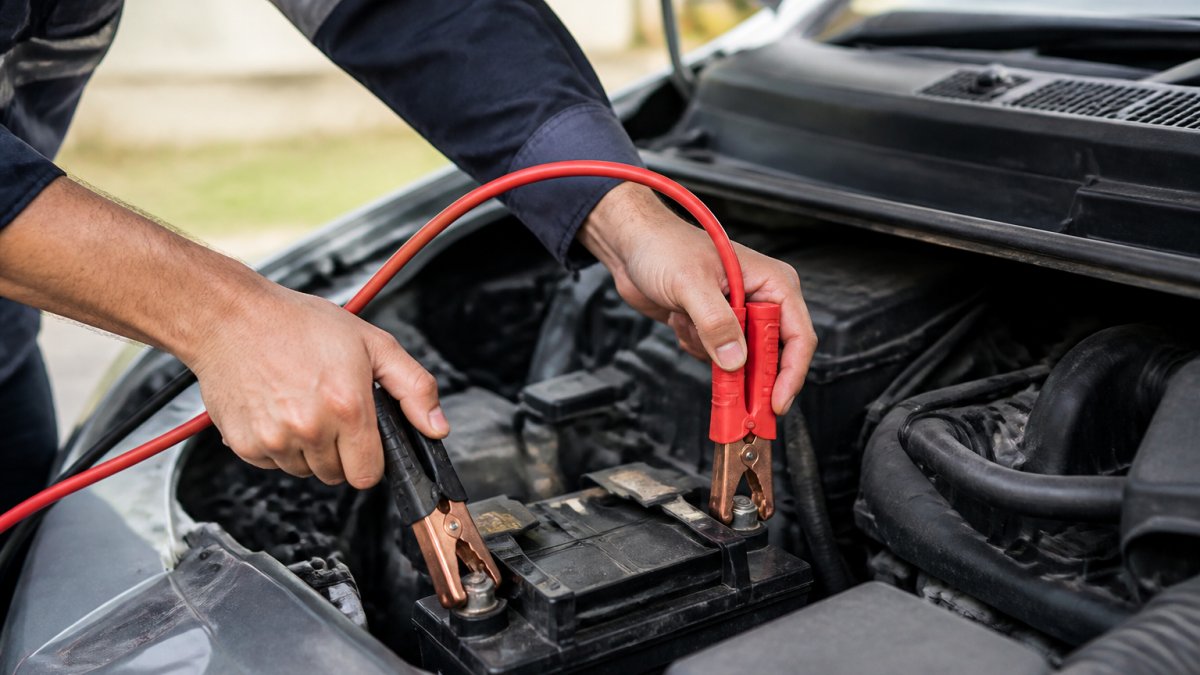
Jump-starting a car is straightforward when you follow the right steps. The process uses another vehicle’s battery to provide temporary power to your dead battery, allowing your engine to start. Once running, your alternator takes over and recharges the battery. This works well for a truly dead battery, but not for every no-start situation.
Equipment You’ll Need
You’ll need jumper cables and another vehicle with a working battery. Standard jumper cables are inexpensive and should be in every car’s emergency kit. They come in different gauges (thickness); thicker cables (4 or 2 gauge) work better than thin ones because they carry current more efficiently.
Make sure both vehicles are the same voltage; nearly all modern cars use 12-volt systems, but some larger trucks use 24-volt. Check your owner’s manual if you’re unsure. The cables need to be long enough to reach between the two batteries comfortably, typically 2.4 to 3 meters.
Step-by-Step Jump-Start Process
Step 1: Position the vehicles. Park the working vehicle close to yours, but not touching. Turn off both engines. This prevents electrical damage when you connect the cables.
Step 3: Attach the black cable. The black (negative) cable connects to the negative terminal on the working battery, marked with a minus sign.
Step 4: Start the working vehicle. Let it run for 2 to 3 minutes before attempting to start your car. This builds up charge in the dead battery.
Step 5: Start your car. Try starting your engine. If it doesn’t start after 30 seconds, wait another minute and try again. Don’t crank continuously; that drains the helper battery.
Step 6: Remove cables in reverse order. Once your engine is running, remove the black cable from your engine block first, then from the working vehicle.
Dead Battery Roadside Assistance vs. Towing
Not every dead battery requires a tow truck. Understanding when a jump-start solves the problem and when you need towing is essential for making the right call.
When a Jump-Start Will Solve the Problem
A jump-start works when your battery is genuinely dead but still functional. If you left your lights on overnight, drained the battery, and nothing else is wrong, a boost gets you going immediately. The battery recharges as you drive, and you’re back to normal.
Jump-starts also work if you’ve had a long period of inactivity, say, a car sitting unused for several weeks. The battery naturally loses charge over time. A boost restores enough power to start the engine, and normal driving recharges it.
If your car starts immediately after a jump-start and runs normally, your battery is likely fine. Drive directly to a repair shop to have the battery tested, but you don’t need a tow. Many auto parts retailers offer free battery testing.
When Towing Is Necessary
Towing becomes necessary when the jump-start doesn’t work or your car dies again within minutes. This usually signals a failing alternator, the component that recharges your battery while the engine runs. If the alternator isn’t working, the battery drains continuously, and no boost will fix it permanently.
You also need towing if your battery is physically damaged (cracked case, leaking acid) or if you’re in an unsafe location where attempting a jump-start creates a hazard. A professional towing service for dead battery situations gets you to a repair shop safely without risk.
If you don’t have access to another vehicle or jumper cables, towing is your fastest option. Towing PerfekTow provides 24/7 roadside assistance across the region, we arrive quickly and handle the situation safely so you don’t have to wait for help from strangers or risk your safety on the roadside.
Recognizing Alternator Failure Symptoms
An alternator that’s failing often mimics a dead battery, but the fix is completely different. Learning to spot alternator problems early prevents you from being stranded.
The most obvious sign is a battery warning light on your dashboard; it looks like a battery symbol and appears when the alternator isn’t charging. You might also notice that your headlights dim when you accelerate or brighten when you decelerate. This happens because the alternator isn’t maintaining steady voltage.
Electrical systems behave strangely when the alternator fails. Your radio might cut out, dashboard lights flicker, or the power windows move slowly. In extreme cases, the engine stalls while driving because the ignition system loses power.
If you jump-start your car and it runs fine, but the battery warning light stays on, your alternator needs replacement. Don’t ignore this; a failing alternator will drain even a new battery within hours.
What Happens After a Successful Boost
Once your car starts after a jump-start, the work isn’t finished. Your alternator takes over the job of recharging the battery, but it needs time and driving to do that effectively.
Drive for at least 20 to 30 minutes after a successful boost. Highway driving is better than stop-and-go city traffic because it keeps your engine at a steady RPM, allowing the alternator to charge more efficiently.
Don’t turn off your engine immediately after arriving home. Let it idle for a few minutes so the battery can build up charge. If you must turn it off, be confident the battery has enough charge to restart the engine the next time you need it.
Have your battery tested within a few days. Many auto parts stores offer this service for free. A battery that’s been fully dead may not recover completely, and you might need replacement. Testing tells you whether the battery is still reliable or if you should replace it before it fails again.
How to Request Emergency Roadside Service
When you need help with a dead battery, knowing what information to have ready and what to expect makes the process smoother and faster.
Information to Have Ready
When you call for a towing service for dead battery assistance, have your vehicle’s location ready: use a street address, intersection, or GPS coordinates if you’re on a highway. Describe your location clearly: “I’m on Highway 2 northbound, just past the Deerfoot Trail exit” is more helpful than “I’m on the highway somewhere.”
Know your vehicle’s year, make, and model. This helps the technician prepare for your specific situation and ensures they bring the right equipment. Tell them whether your engine cranks when you turn the key or if there’s complete silence; this helps them diagnose the problem faster.
Let them know if you’re in a safe location or if you need priority assistance because you’re in traffic or poor weather. If you have any safety concerns, mention them immediately.
What to Expect When Help Arrives
A professional roadside assistance team arrives prepared to handle your situation safely. They’ll assess your battery and attempt a jump-start if appropriate. If that works, they’ll verify your car runs normally before leaving.
If a jump-start doesn’t work or isn’t safe, they’ll tow your vehicle to a repair shop. You can ride in the tow truck or stay in your vehicle, depending on the situation and your preference. A reputable service like Towing PerfekTow provides clear communication throughout; you’ll know exactly what’s happening and what comes next.
The entire process is designed to be efficient. A successful jump-start is faster; towing takes longer because of transport time.
Special Considerations for Electric and Hybrid Vehicles
Electric and hybrid vehicles have different battery systems than traditional gas-powered cars, and this changes how roadside assistance works.
Hybrid vehicles have two batteries: a small 12-volt battery (like a gas car) and a large high-voltage battery that powers the electric motor. A dead 12-volt battery still requires jump-starting, but the process is identical to a gas vehicle.
Pure electric vehicles don’t have a traditional starter motor or alternator. They use a 12-volt battery for accessories like lights and the power steering pump, but the main battery is high-voltage.
Never attempt to work on the high-voltage battery system yourself. If your electric or hybrid vehicle won’t start and a 12-volt jump-start doesn’t fix it, call for professional towing. These vehicles require specialized diagnostic equipment and training.
Towing PerfekTow’s team is equipped to handle electric and hybrid vehicles safely. We understand the unique requirements of these systems and can transport them to dealers or specialized repair shops without risk.
When your car won’t start due to a dead battery, you have options, but the safest choice is professional help. Our licensed and insured team handles dead batteries, jump-starts, and vehicle recovery with clear communication and transparent service. Contact us for immediate roadside assistance and get back on the road with confidence.
Frequently Asked Questions
Can a towing service help with a dead battery?
Yes. A towing service for dead battery situations can provide jump-start assistance to get your vehicle running again. If a jump-start doesn’t work or your battery is damaged, a professional towing service can transport your car to a repair facility. Our licensed and insured team assesses your situation and provides a no-obligation quote before any service begins, ensuring you understand your options upfront.
When should I call roadside assistance instead of attempting a jump-start myself?
Call for professional dead battery roadside assistance if you lack jumper cables, feel unsafe working near traffic, or your vehicle won’t start even after a jump-start attempt. Seniors or drivers unfamiliar with vehicles should always request professional help rather than risk injury or damage. Our 24/7 service arrives to handle the situation safely, allowing you to stay in your vehicle and out of harm’s way.
How can I tell if my car battery is dead or if the alternator has failed?
A dead battery typically shows no lights, clicking sounds, or dashboard activity when you turn the key. Alternator failure symptoms include lights dimming while driving, a warning light on the dashboard, or a battery that drains shortly after a successful jump-start. If your vehicle starts after a boost but the battery dies again within hours, the alternator likely isn’t recharging it. Professional diagnosis ensures you get the right solution.
What should I do if my car is stuck in snow or a ditch along with a dead battery?
Call for emergency roadside service immediately. Vehicle recovery in difficult conditions like snow or ditches requires specialized equipment and expertise. Our team handles winch-outs and recovery operations safely. When you call, describe your exact location and situation so we dispatch the appropriate equipment and can provide an accurate response time.