Table of Contents
- What to Do During a Winter Breakdown: First Steps
- Building a Winter Car Emergency Kit
- How to Stay Warm in a Broken-Down Car
- What to Do When Stranded in Snow
- How to Make a Broken-Down Car Visible in Snow
- When to Call for Professional Roadside Assistance
- Winter Breakdown Safety: What Not to Do
- Frequently Asked Questions
Last Updated: October 16, 2026
What to Do During a Winter Breakdown: First Steps
A winter breakdown can escalate from inconvenient to dangerous fast. Your immediate priorities are safety, visibility, and warmth, in that order.
The moment your car won’t start or breaks down, pull as far off the road as possible and turn on your hazard lights. On a highway or busy road, stay inside with doors locked unless exiting is clearly safer. Never stand between your car and oncoming traffic.
Call for professional roadside assistance right away. At Towing PerfekTow, our 24/7 team responds fast and provides no-obligation quotes before any service begins. While you wait, stay visible and warm: turn off the engine to conserve fuel but run it briefly if temperatures drop dangerously, keep your phone charged, and tell someone your location.
Don’t walk for help in snow or poor visibility. You’re warmer and more visible inside your vehicle, and rescuers look there first.
Building a Winter Car Emergency Kit
Your emergency kit is the buffer between an inconvenience and a crisis during a winter breakdown. Build it in layers so you can grab what you need without digging through the trunk in the cold.
Layer 1, Warmth and shelter (the priority). Pack a wool or synthetic blanket and a sleeping bag rated for your region’s coldest temperatures.
Layer 2, Food and water. High-calorie, non-perishable snacks: granola bars, nuts, trail mix, hard candy, chocolate. Your body burns calories generating heat, so calorie-dense food is functional.
Layer 3, First aid and medication. A basic first-aid kit with bandages, gauze, antiseptic wipes, and pain relievers, plus a seven-day supply of any prescription medication rotated before expiry, and antihistamines or allergy medication for occupants.
Layer 7, Comfort and hygiene. Paper towels, hand sanitizer, wet wipes, a small tarp, and rope. A tarp doubles as a windbreak or ground cover if you must work outside.
Store everything in a waterproof, latch-top container accessible in the trunk or cargo area, not buried under luggage.
Keep a smaller “grab kit”, mylar blanket, flashlight, whistle, and phone cable, in the glovebox or center console. If you cannot safely reach the trunk, that kit is what keeps you warm and reachable until help arrives.
Never store water in glass containers or leave aerosol cans in a vehicle that sits below freezing. Glass cracks and aerosols can rupture, and both create hazards when you need the kit most.
Transport Canada winter driving safety guidance recommends keeping emergency supplies in your vehicle year-round and maintaining regular vehicle maintenance to prevent winter breakdowns.
How to Stay Warm in a Broken-Down Car
Staying warm in a broken-down car is a heat-budget problem: managing how fast your body loses heat against what the vehicle and your layers retain.
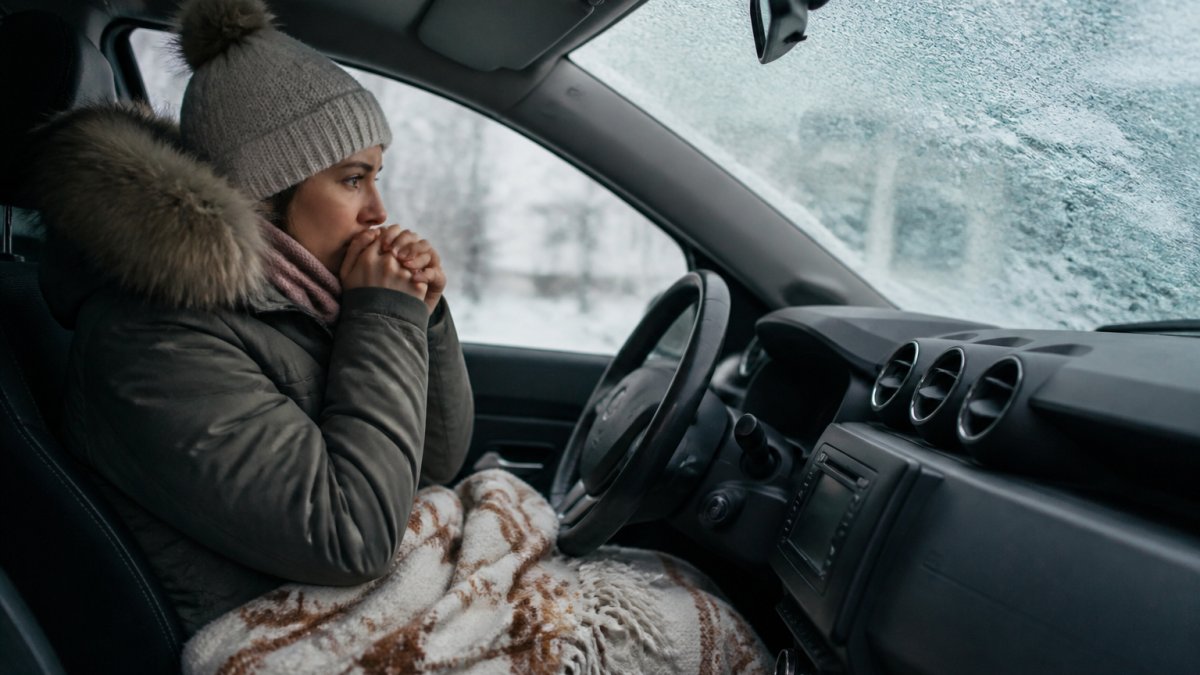
Step 1, Seal the cabin. Close all windows and doors completely; even a small gap lets heat escape.
Step 2, Layer strategically. Put on every layer you have, starting with a moisture-wicking base if available. Remove wet clothing immediately, wet fabric accelerates heat loss.
Step 3, Run the engine in short intervals. Run the engine and heater about 10 minutes on, 10 minutes off to manage fuel use and prevent carbon monoxide buildup.
Step 4, Generate heat without fuel. Keep moving inside: flex your muscles, do seated exercises, rub your arms and legs. Avoid alcohol, it dilates blood vessels and speeds heat loss.
Step 6, Signal and reassess. If you’re getting dangerously cold and help hasn’t arrived, signal passing vehicles or call emergency services again with your exact location, vehicle description, and the problem.
The order matters: seal the cabin, layer up, then heat in short intervals. Fuel is a finite resource, treat every minute of engine time as a trade against the hours you may still need to wait.
Carbon monoxide is colorless and odorless. Symptoms like drowsiness, confusion, and headaches develop slowly, and you may lose consciousness before recognizing the danger. Clear the exhaust pipe every 15-20 minutes if snow is falling or drifting.
What to Do When Stranded in Snow
Being stranded in snow adds complexity to a winter breakdown. Your immediate challenge is preventing your vehicle from becoming buried and ensuring you remain visible.
If you slide off the road into snow, stay in your vehicle. Walking for help in snowstorms or poor visibility is more dangerous: you’ll get disoriented, exhaust yourself faster in the cold, and rescuers will struggle to find you away from your car.
Clear snow from around your exhaust pipe every 15-20 minutes to prevent carbon monoxide accumulation, blocked pipes force exhaust gases back into the cabin, and you may not notice symptoms until it’s too late.
If you have a shovel, dig out your tires and add traction underneath with sand, kitty litter, or floor mats. Avoid spinning your wheels, it digs you deeper and drains the battery. Rock the vehicle gently forward and backward if only slightly stuck.
If your car is truly stuck, stay put. Turn on your hazard lights, set out reflective triangles or flares, and wait for professional help.
How to Make a Broken-Down Car Visible in Snow
Visibility during a winter breakdown can be critically low due to snow, darkness, and poor weather, so making your vehicle obvious to drivers and responders is essential.
Turn on your hazard lights immediately, they’re visible from far greater distances than headlights. If they fail, use your headlights and interior dome light. Position your vehicle as far off the road as safely possible, but stay inside unless absolutely necessary.
Place reflective triangles or flares at least 30 meters behind your vehicle, closer in heavy snow since visibility drops rapidly.
Keep your phone visible and charged, using a power bank if needed. If the engine runs briefly for heat, leave your lights on so the vehicle stands out; in darkness, the lit interior dome light makes it easier to spot.
Use road flares cautiously in wind, they can blow out or spread embers; reflective triangles are safer and reusable. Never stand in the roadway to flag down help, as drivers may not see you in time.
When to Call for Professional Roadside Assistance
Knowing when to call for help versus attempting self-recovery prevents dangerous mistakes during a winter breakdown. Call immediately if you’re stuck in snow, your engine won’t start, you’ve lost power steering or brakes, or you’re unsure what’s wrong.
Don’t delay because the problem seems minor, winter conditions accelerate deterioration, and a small issue can become life-threatening quickly. A professional towing service has the tools, equipment, and expertise to recover your vehicle without additional damage.
Towing PerfekTow provides licensed and insured roadside assistance across the region, available 24/7, with no-obligation quotes before service begins. Our team handles everything from flat tires and dead batteries to complex recovery in snow and ditches, with clear communication throughout.
Call rather than text if possible, your voice conveys urgency and location more clearly. Provide your exact location, vehicle description, and the problem. Stay inside with doors locked unless the driver asks you to exit, and verify the operator’s credentials and company before letting them approach your car.
Winter Breakdown Safety: What Not to Do
Panic and poor judgment during a winter breakdown can turn a recoverable situation into a tragedy. Avoid these mistakes.
Never leave your vehicle to walk for help in snow or heavy cold.
Don’t attempt repairs yourself unless you have specific expertise and proper tools.
Never run your engine with the exhaust pipe blocked.
Avoid accepting help from strangers without verifying they’re legitimate towing operators. Request identification and company confirmation, and don’t hand over your keys until their credentials match your dispatch information.
Don’t drink alcohol or take sedating medications while waiting for help. You need to stay alert to changing conditions, and alcohol causes rapid heat loss, making hypothermia more likely.
Never leave children or pets unattended in a vehicle during a winter breakdown, even with the engine running, conditions change rapidly and they can’t respond independently.
Winter breakdowns demand preparation, quick thinking, and professional support. Build your emergency kit before winter, know how to stay warm and visible, and call for licensed roadside assistance immediately.
| Winter Breakdown Response | Action | Why It Matters |
|---|---|---|
| Immediate step | Pull off road, turn on hazard lights | Prevents additional collisions |
| First call | Contact roadside assistance | Professional help arrives faster than walking |
| Visibility | Use flares, triangles, or reflective markers | Other drivers and rescuers can locate you |
| Warmth | Run engine in short intervals, use blankets | Prevents hypothermia while conserving fuel |
| Exhaust safety | Clear snow from pipe every 15-20 minutes | Prevents carbon monoxide poisoning |
| Vehicle exit | Stay inside unless told to leave | You’re warmer, more visible, easier to find |
A winter breakdown tests both your preparation and your judgment. Towing PerfekTow provides licensed, insured roadside assistance available around the clock, with upfront quotes and clear communication from start to finish. Transport Canada winter driving safety guidance recommends keeping emergency supplies in your vehicle year-round, and maintaining regular vehicle maintenance to prevent winter breakdowns.
Frequently Asked Questions
What should you do first if your car breaks down in winter?
First, turn on your hazard lights and move to the shoulder if it’s safe. Turn off the engine and assess your situation. If you’re on a busy highway, stay in your vehicle with doors locked and wait for professional help. Call roadside assistance immediately. Do not attempt to walk for help in severe cold or poor visibility, stay with your vehicle where rescuers can find you. Keep your phone charged and let someone know where you are.
What should you keep in your winter car emergency kit?
A winter car emergency kit should include blankets or sleeping bags, extra warm clothing, hand and foot warmers, a flashlight with extra batteries, jumper cables, a basic tool kit, sand or kitty litter for traction, a phone charger or portable battery pack, water and non-perishable snacks, a first-aid kit, flares or reflective triangles, and a small shovel. Include a tire pressure gauge and an ice scraper. Store these items in your vehicle before winter arrives so they’re ready when you need them.
How do you stay warm while waiting for roadside assistance?
Keep the engine off to conserve fuel, but run it in short 10-minute intervals every hour to generate heat. Use blankets, extra clothing, or a sleeping bag to insulate yourself. Close all windows and doors to trap warm air. If you have hand or foot warmers in your emergency kit, activate them. Move around inside the car periodically to maintain circulation. Stay hydrated and eat small snacks to help your body generate heat. If you’re with others, huddle together for shared warmth.
How can you make your vehicle visible during a winter breakdown?
Turn on your hazard lights immediately. Place reflective triangles or flares behind your vehicle at a safe distance, at least 30 meters back on highways. If you have a high-visibility vest, wear it when stepping outside. Tie a bright cloth or emergency flag to your antenna or door handle. Clear snow and ice from your windows and lights so other drivers can see you. If visibility is very poor, stay inside your vehicle with lights on rather than standing outside where you’re harder to spot.
Should you stay in your car during a winter breakdown?
Yes, in most cases you should stay in your vehicle. Your car provides shelter from wind, cold, and precipitation, and it’s easier for rescue crews to locate you. The exception is if your vehicle is in immediate danger (e.g., on railroad tracks or in heavy traffic). Lock your doors, turn on hazard lights, and call for help. Only leave your vehicle if you’re certain help is nearby or if staying puts you in greater danger. Never attempt to walk long distances in severe winter weather.
What are 10 tips for surviving a winter breakdown?
1) Stay in your vehicle. 2) Turn on hazard lights. 3) Call for professional assistance immediately. 4) Run the engine briefly every hour for warmth. 5) Keep an emergency kit in your car year-round. 6) Make yourself visible with reflective markers or bright clothing. 7) Stay hydrated and eat small snacks. 8) Keep your phone charged. 9) Dress in layers before winter weather arrives. 10) Check your vehicle’s battery, tires, and fluid levels before winter.
When should you call roadside assistance after a winter breakdown?
Call immediately if your vehicle won’t start, you’re stranded in snow or ice, you have a flat tire in unsafe conditions, or you’re on a busy highway. Don’t wait if temperatures are dropping or visibility is poor. If you’re unsure whether you can safely handle the situation yourself, call for help rather than risk getting stuck longer. Professional roadside assistance is available 24/7 during winter and can reach you much faster than attempting a self-rescue in dangerous conditions.