
Table of Contents
- What to Do If Car Won’t Start: First Steps
- Car Won’t Start Clicking: Battery or Starter Issue?
- Car Won’t Start But Lights Come On: Electrical Diagnosis
- How to Jump-Start a Car Safely
- Signs of a Bad Starter: When It’s Not the Battery
- Other Common Reasons Your Car Won’t Start
- When to Stop Troubleshooting and Call for Help
- Frequently Asked Questions
Last Updated: October 10, 2026
What to Do If Car Won’t Start: First Steps
When your car won’t start, stay calm and check what’s actually happening. Your car’s dashboard and sounds tell you a lot, listen carefully and look at what lights appear. These clues help you understand whether it’s a battery issue, a starter problem, or something else entirely.
Check for dashboard lights and sounds
Turn the key to the “on” position without cranking the engine. Do your dashboard lights come on? If yes, you have electrical power. If no, your battery is likely dead.
Now try to start the engine. Pay attention to what happens:
- Rapid clicking sound, The battery has power but is too weak to turn the engine over. This usually means a dead or failing battery.
- Single loud click, The starter motor may be stuck or faulty.
- No sound at all, Either the battery is completely dead or there’s an electrical connection problem.
- Engine cranks but won’t turn over, The engine is turning, but something else is preventing it from running (fuel, ignition, or immobiliser issue).
If your car won’t start and you hear clicking sounds, do not keep trying to start it. Each attempt drains the battery further. Stop after two or three attempts and assess your options.
Assess your location and safety
Before you do anything else, make sure you’re safe. If you’re on a busy highway, in a dangerous area, or in bad weather, do not spend time troubleshooting.
Move your car to a safe spot if possible. Turn on your hazard lights. If you’re stuck in traffic or on a shoulder, call for roadside assistance immediately.
If you’re in a safe location and want to troubleshoot, write down what you observe: sounds you hear, whether lights work, and whether the engine cranks. This information helps a mechanic understand the problem faster.
Car Won’t Start Clicking: Battery or Starter Issue?
Clicking sounds are one of the most common signs when a car won’t start. The type of clicking tells you a lot about what’s wrong.
Single rapid click versus repeated clicking
A single loud click means the starter motor is not engaging properly, the battery has power but the starter is stuck or faulty. Repeated rapid clicking means the battery lacks enough charge to turn the engine over. The difference matters: a dead battery can be jump-started; a faulty starter cannot.
What clicking tells you about battery health
If your car won’t start and you hear rapid clicking, your battery is the problem. Cold weather worsens this because batteries lose power in freezing temperatures.
Check your battery terminals. If they’re covered in white, blue, or green corrosion, clean them with a wire brush or cloth and baking soda mixed with water. Once clean, try starting the engine. If the car starts, you’ve found your problem. If not, the battery itself is likely dead and needs replacement or jump-starting.
Never touch corroded battery terminals with bare hands. Battery acid can burn your skin. Wear gloves or use a cloth to protect yourself.
Car Won’t Start But Lights Come On: Electrical Diagnosis
When your dashboard lights work but the engine will not turn over, you have electrical power but something else is blocking the engine from starting.
Engine cranks versus engine won’t turn over
Engine cranks means the starter motor turns the engine over but it doesn’t fire up, the starter and battery work, but something prevents combustion. Engine won’t turn over means the starter isn’t engaging at all despite working lights, usually a starter, solenoid, or ignition switch problem.
If your car won’t start but lights come on and the engine cranks, check the fuel system (gas in tank, fuel pump working), ignition system (spark plugs firing, ignition coil working), and timing belt (snapped or slipped).
When lights work but the engine stays silent
No sound from the engine but bright dashboard lights points to the starter, ignition switch, or electrical connection. Check that the gear selector is in Park (automatic) or Neutral (manual), many cars won’t start otherwise. Try cycling the key: turn to “on”, wait two seconds, then start. If nothing changes, the starter motor or solenoid is likely faulty and needs professional repair.
How to Jump-Start a Car Safely
Jump-starting a car is straightforward if you follow the right steps. You need another car with a working battery, jumper cables, and about ten minutes.
What you’ll need before you begin
Gather jumper cables (at least 4 to 6 metres long), another vehicle with a working battery, and optional safety glasses and gloves. Make sure both cars are turned off before connecting cables. Position them close enough that cables reach both batteries but don’t let the vehicles touch.
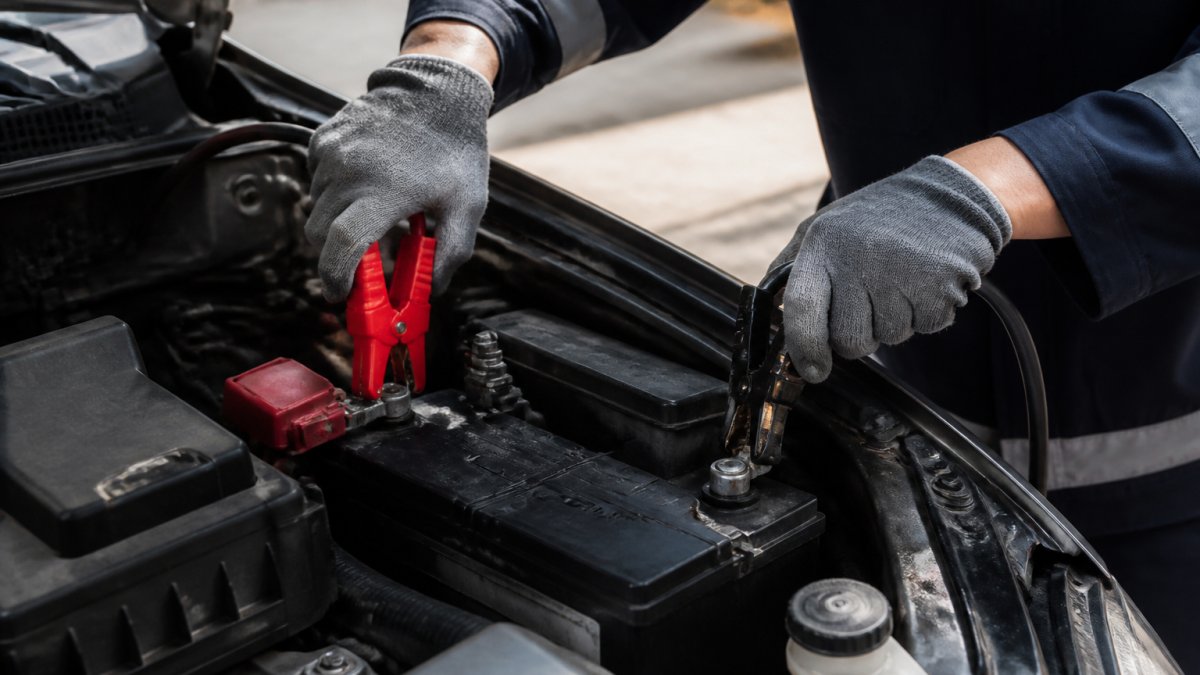
Step-by-step jump-start procedure
Step 2: Connect the other end of the red cable to the working battery’s positive terminal. Again, this is the red post marked (+).
Step 5: Start the working car and let it run for two to three minutes. This charges the dead battery.
Step 6: Start your car. If it starts, leave both engines running for another minute or two.
Step 7: Disconnect the cables in reverse order. Remove the black cable from your car first, then from the working car.
After the jump-start: what to do next
Once your car starts, drive it for at least 20 to 30 minutes to recharge the battery. If your car won’t start even after a jump-start, the battery is likely damaged or the problem isn’t the battery, stop trying and call for roadside assistance.
A successful jump-start means your battery was discharged, not necessarily dead. Charge it fully by driving or using a battery charger. If the battery drains again within days, something is draining it, have a mechanic inspect the alternator and electrical system.
Signs of a Bad Starter: When It’s Not the Battery
A faulty starter is one of the most common reasons a car won’t start. Unlike a dead battery, a bad starter cannot be fixed with a jump-start.
Starter solenoid versus starter motor failure
The starter has two main parts: the solenoid (electromagnetic switch) and the motor (turns the engine over). A single loud click suggests a faulty solenoid. No sound at all suggests a dead starter motor. If the starter motor is failing, it may crank slowly or intermittently, inconsistency is a classic sign of wear.
How to distinguish starter problems from other causes
Turn the key to “on”, if dashboard lights come on bright, the battery has power. If you hear nothing from the starter area but lights work, the problem is likely the starter, ignition switch, or their electrical connection. To test the starter, turn on headlights and try to start. If headlights dim significantly, the battery is weak; if they stay bright but nothing happens, the starter is faulty. A faulty starter needs mechanic replacement, don’t waste time troubleshooting further.
Other Common Reasons Your Car Won’t Start
Not every no-start is caused by a battery or starter. Several other systems can prevent an engine from running.
Fuel system, ignition system, and immobiliser issues
If your engine cranks but won’t turn over, check the fuel gauge first, the fuel pump may have failed, the filter may be clogged, or you’re out of gas. Faulty spark plugs or a bad ignition coil prevent fuel ignition. A worn ignition switch may not send power to the starter. Modern cars have an immobiliser that locks the engine if the key isn’t recognized. Try your spare key; if it starts the car, your primary key needs a new battery or replacement.
Weather, timing, and situational factors
Cold weather drains battery power faster. In freezing temperatures, a battery that works fine in summer may not have enough charge to start the engine in winter.
If your car has been sitting unused for weeks or months, the battery may have discharged naturally. Batteries lose charge over time, especially in cold conditions.
If you’re in a manual transmission car, make sure the clutch pedal is fully pressed. Many manual cars have a safety switch that prevents starting unless the clutch is disengaged.
When to Stop Troubleshooting and Call for Help
Troubleshooting is useful only if you’re in a safe location and have time. If any of these apply, stop troubleshooting and call for professional help immediately.
Safety red flags that mean you need roadside assistance now
You’re on a busy highway or in heavy traffic. Staying on the shoulder with your car disabled is dangerous.
You’re in bad weather, heavy rain, snow, fog, or extreme heat. Troubleshooting in these conditions is uncomfortable and unsafe.
You’re in an unfamiliar or unsafe area.
Your car will not start after multiple attempts. Repeated cranking drains the battery and can damage the starter.
You smell gas, oil, or burning rubber. These smells suggest a mechanical or electrical problem beyond a simple jump-start.
What to tell your roadside assistance provider
When you call, provide clear information:
- Where are you located? (Street, highway marker, landmark)
- What sounds or signs did you notice? (Clicking, cranking, nothing, lights working or not)
- How many times have you tried to start it?
- Is the car in a safe location?
This information helps the roadside assistance team bring the right equipment and understand the problem before they arrive. At Towing PerfekTow, our licensed and insured team provides fast, no-obligation quotes and professional support 24/7. We serve Calgary, Airdrie, and surrounding areas, and we prioritize your safety and clear communication every step of the way.
A car that won’t start is frustrating, but most causes are straightforward to diagnose. Battery issues, dead starters, and fuel system problems account for the vast majority of no-start conditions.
Frequently Asked Questions
What should I check first if my car won’t start?
Start by observing what happens when you turn the key: Do you hear clicking, a grinding sound, or complete silence? Check your dashboard lights, if they’re bright, your battery likely has charge. If lights are dim or absent, a flat battery is the most common culprit. Next, look at your battery terminals for corrosion or loose connections. These initial observations tell you whether to attempt a jump-start or call for professional help immediately.
What does it mean if my car won’t start but the lights come on?
Lights coming on while the car won’t start points to an electrical issue beyond a dead battery. The battery has enough power for lights but not for the starter motor or ignition system. This suggests a faulty starter motor, bad alternator, weak battery connections, or ignition switch failure. Try turning on the headlights and listening for clicking when you turn the key. A single loud click often means a starter solenoid problem, while silence suggests the ignition system isn’t engaging.
Can a dead battery cause a car to click when I try to start it?
Yes, a dead or dying battery is the most common cause of clicking sounds. Rapid clicking (often 10+ times per second) typically indicates insufficient power reaching the starter solenoid. A single loud click usually means the solenoid is trying to engage but lacks the current to pull the starter motor. Check your battery terminals for corrosion, tightness, and visible damage. If terminals are clean and tight, a jump-start often restores enough power to start the engine and run the vehicle to a repair shop.
What are the signs of a bad starter, and how do I know it’s not just the battery?
A bad starter typically produces a single loud click or grinding noise, even if your battery is fully charged and lights are bright. You may also notice a burning smell near the engine or hear a whirring sound without the engine cranking. To confirm the starter is the problem, have someone turn the headlights on while you attempt to start the car, if lights stay bright and you hear only one click, the battery is likely fine but the starter needs replacement. A professional mechanic can test the starter motor and solenoid to confirm.